Optimizing Industrial Facilities: Balancing High-Volume Airflow, Cleanroom Integrity, and Precision Engineering
Optimizing Industrial Facilities: Balancing High-Volume Airflow, Cleanroom
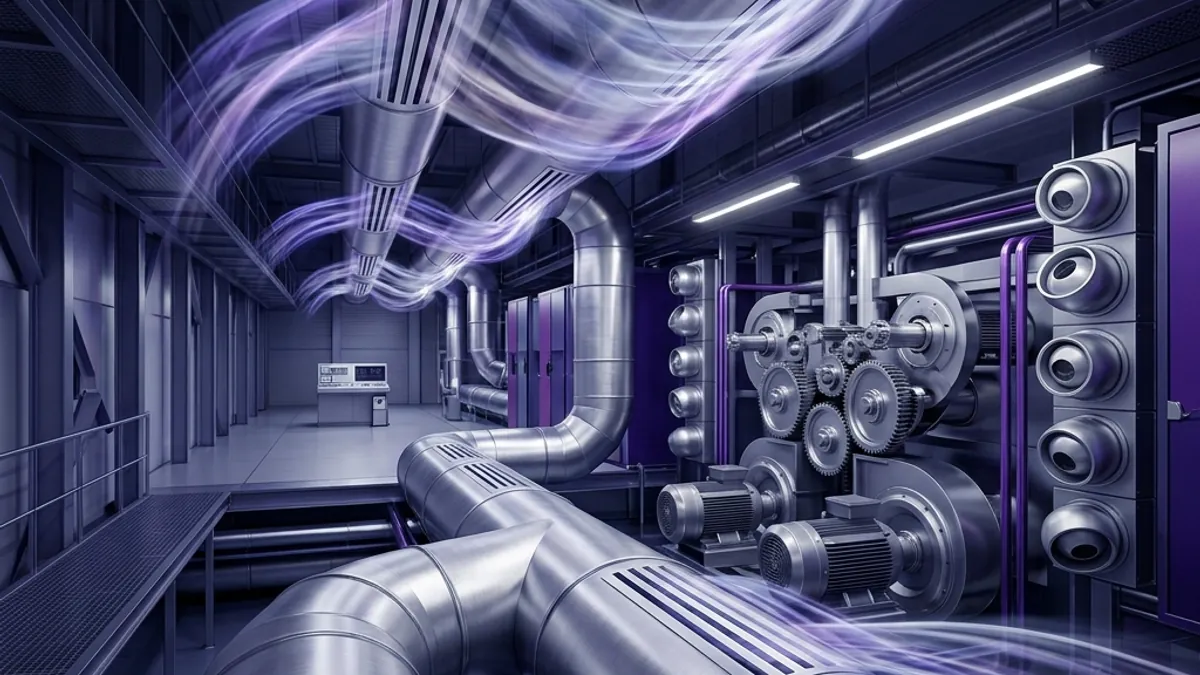
Integrity, and Precision Engineering In modern industrial facilities, infrastructure performance relies on an invisible equation: how effectively can you manage your environment while maximizing mechanical reliability? Whether you are operating a large-scale manufacturing plant, an automotive facility, or a strict pharmaceutical cleanroom, your choice of component engineering dictates your operational efficiency. At Mechwheel, we look at industrial infrastructure through three critical lenses: Airflow Dynamics, Contamination Control, and Precision Mechanical Components. Let’s break down how balancing these elements protects your workforce, your products, and your bottom line. ## 1. Mastering Airflow Dynamics in Large Open Spaces Managing air distribution in expansive industrial environments requires much more than simply moving air from point A to point B. It requires targeted zone management, pressure balancing, and structural safety containment. An efficient airflow ecosystem relies on a precise hierarchy of hardware components working together: - Zonal Distribution: High-quality Air Grilles and multi-directional Ceiling Diffusers ensure uniform temperature distribution and prevent stale air pockets. For modern architectural structures requiring flexible, customizable air paths, Linear & Slot Diffusers offer low-profile, adjustable performance. - Targeted High-Velocity Cooling: In expansive facility floors where localized heat dissipation is a challenge, directional spot-cooling vents like Eye Ball units and long-throw Jet Diffusers allow operators to target high-velocity airstreams precisely where machinery or workers require it most. - System Controls & Life Safety: True efficiency requires precise system regulation. Standard Dampers handle everyday volume control and fluid ductwork management. However, life safety infrastructure requires a dedicated tier of certified Fire & Smoke Dampers to isolate risk zones automatically and secure smoke extraction routing in an emergency. For external exposures, weatherproof and acoustic Louvers shield your intake tracks from the elements while attenuating heavy equipment noise. ## 2. The Anatomy of Contamination Control in Cleanrooms When transitioning from standard ventilation to controlled environments, the margins for error vanish. Cleanrooms require strict structural isolation, specialized hardware that prevents particulate accumulation, and targeted decontamination protocols. ### High-Velocity Material Isolation Contamination control starts long before a technician steps onto the cleanroom floor. It requires a tiered defensive barrier to keep ambient atmospheric particles out: - Decontamination Zones: Airshower Nozzles project concentrated, ultra-high-velocity airstreams designed to forcefully strip particulate matter off personnel garments before entry. - Sterile Material Transfer: Moving tools or materials into a clean zone shouldn't compromise the entire room. Integrating static or dynamic SS Pass Boxes creates an airtight buffer zone, protecting sterile environments during active operations. - System Verification: To ensure your HEPA filters are completely sealed and performing to code, DOP Nozzles allow technicians to execute streamlined aerosol challenge testing for strict integrity verification.
Sterile Room Architecture & Hardware The structural envelope itself must be
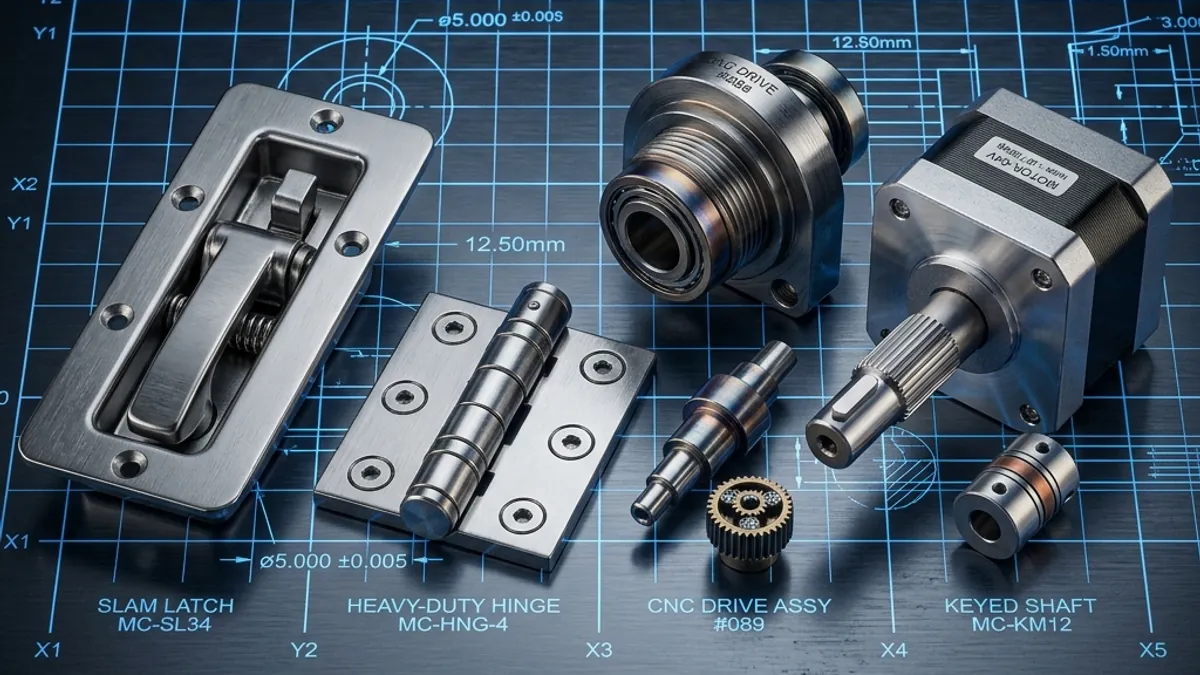
completely seamless. Standard walls and consumer hardware will degrade, shed micro-particles, or harbor microbial growth under harsh chemical washdowns. - Modular Enclosures: Building reliable cleanroom boundaries requires modular CR Panels filled with polyurethane or aluminum honeycomb cores, paired with airtight CR Doors (flush metal or sliding hermetic) and low-leakage Clean room Ducting constructed from high-grade galvanized iron or stainless steel. - Cleanroom-Grade Hardware: Regular hardware corrodes or creates friction dust. Cleanrooms mandate heavy-duty SS Hinges (flush or lift-off designs), ergonomic SS Handles (D-pull or recessed to prevent snagging), and airtight compression SS Latches that maintain perfect seals on utility panels without degrading. ## 3. High-Performance General Engineering Items An optimized facility facility is only as reliable as the powertrain components driving its equipment. Environmental control systems, conveyor belts, and automated machinery rely heavily on custom, precision-machined heavy hardware to maintain uptime. - Rotational Integrity: Industrial electric motors and fans demand high-tolerance, stepped, and keyed Motor Shafts to handle continuous torque and rotational stress without introducing structural deflection or vibration. - Smooth Power Transmission: For optimal mechanical advantage and lower noise signatures, heavy machinery demands precision-cut Motor Gears, including high-durability helical drives and spur pinion gears. - Tailored Manufacturing: When standard off-the-shelf components fail to meet exact system dimensions, custom CNC Turning & Milling Works provide specialized metal brackets and bespoke high-tolerance components built to custom specifications. ## Finding Your Facility's Ideal Setup Every production line, cleanroom, and warehouse features a unique physical profile. Designing a system that minimizes pressure drops, eliminates stagnant dead zones, and guarantees structural compliance requires strategic planning. If you are currently mapping out a facility upgrade, retrofitting an HVAC layout, or sourcing high-spec structural cleanroom components, our engineering team is here to help you select the exact specifications for your operational requirements.